
The bent arm hang, or lock off, is an important position for aerial.
It’s the second strongest and most efficient hanging position we have (the first is a straight arm hang), it’s the top of a pull up, and it’s the position you should start a bent arm inversion from.
In this position, the elbows are bent with the upper arm next to the body, at the seam of your t-shirt.
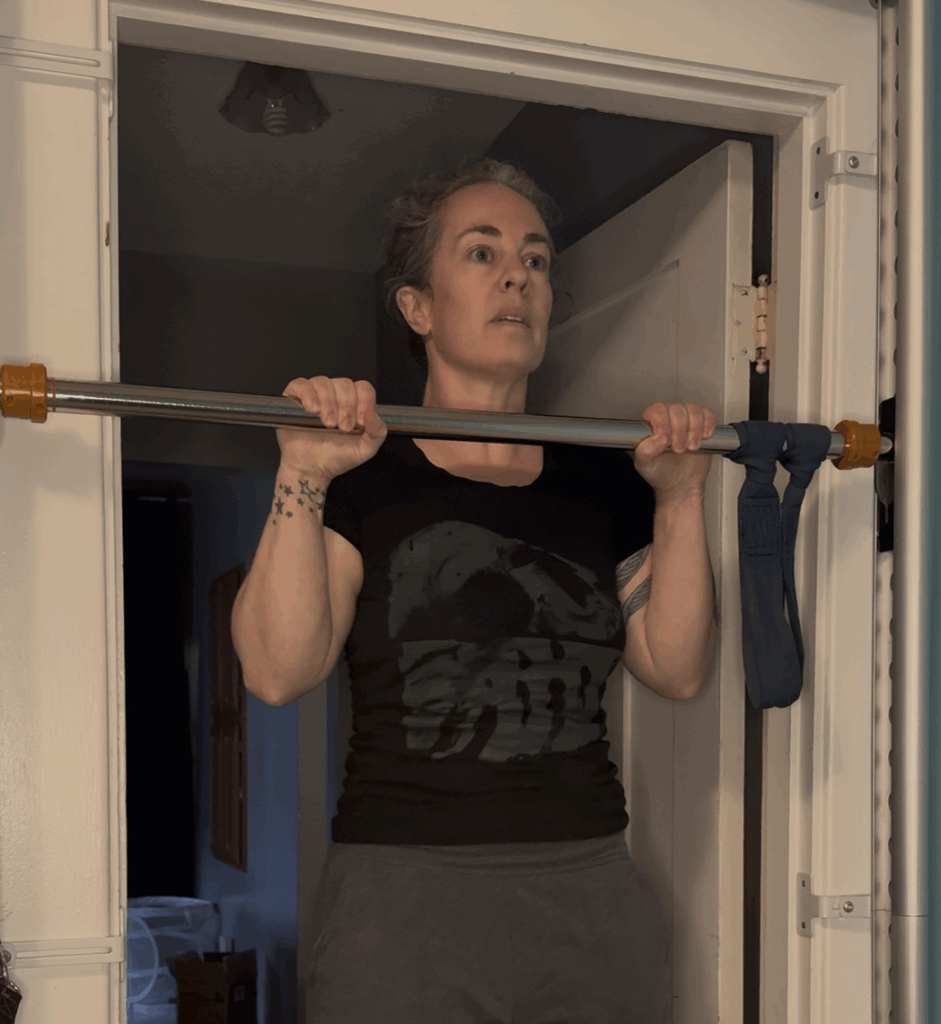
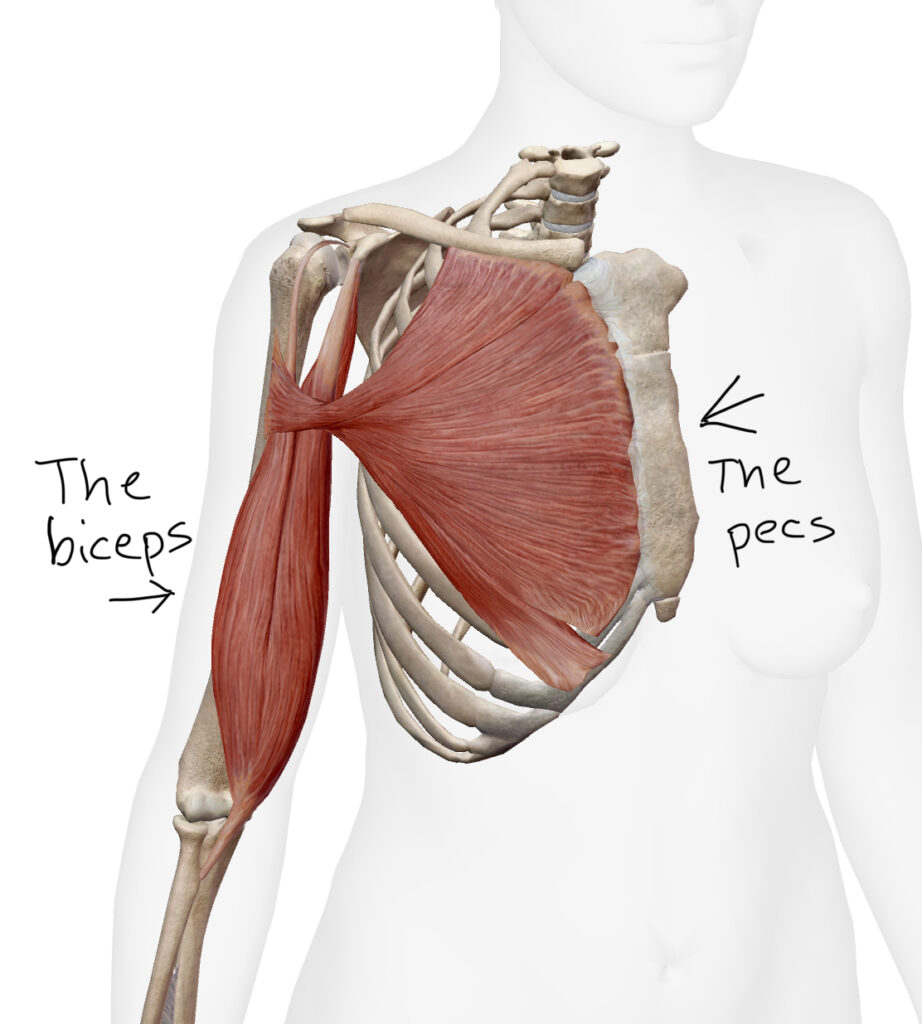
There are three main muscle groups that are working in this position: the lats, the pecs, and the biceps.
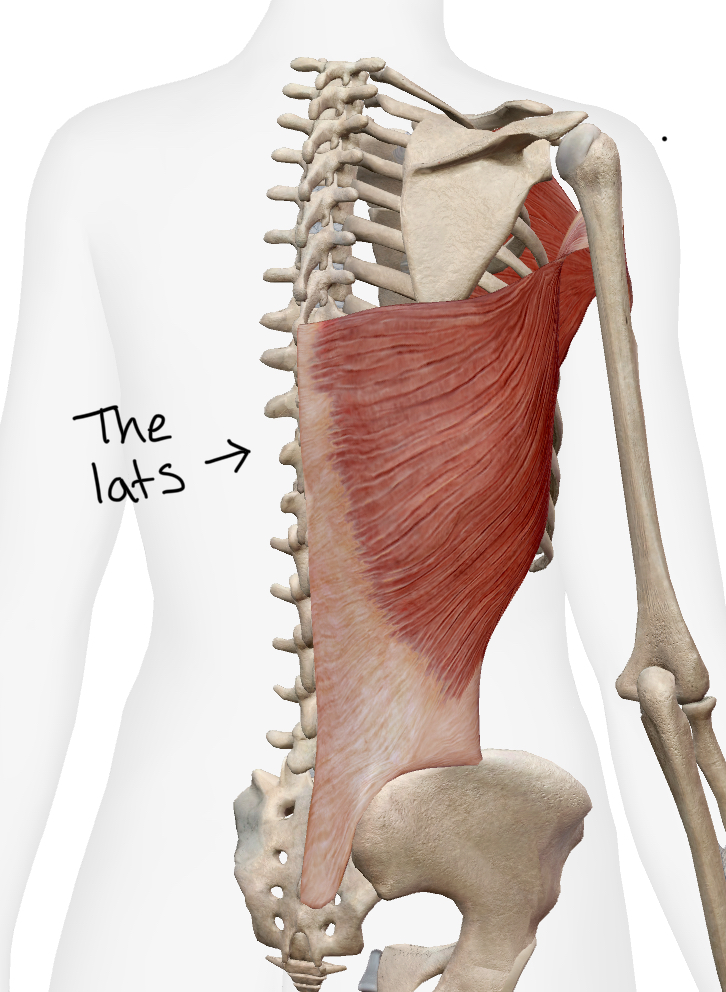
The lats, or latissimus dorsi, are the most important muscle. This big muscle starts in your low back, and goes all the way up to the top of your upper arm.
The lats pull the arm down when the arm is overhead, they pull the arm behind the body, and they pull the arm into the side of the body.
In a bent arm hang, they are holding the arm in place by the side of the body.
The pecs, or pectoralis major, are helping the lats hold the arm in place.
And the biceps are working to keep the elbow bent.
When people struggle with a bent arm hang, there is usually one of three things happening.

The Snuggle:
The snuggle is a very common compensation for a lack of lat engagement. In this position, the arms are usually in front of the body, and the upper back is rounded.
The position of the arms in front of the body puts the work into the pecs and biceps, and the rounded upper back makes it very difficult for the lats to engage.

All Biceps:
In this compensation, students hang with the elbows in front of the body instead of staying by the t-shirt seam.
The pecs will be doing some work to help keep the arm in place, but this position is overly relying on the biceps keeping the elbow bent, rather than support from the larger muscles holding the upper arm still.

Noodle Arms:
With noodle arms, you’ll see someone immediately start to sink down to straight arms when they put their weight into their bent arm hang.
Noodle arms will also show up when attempting an inversion, when the arms straighten too soon as the body starts tipping back.
Noodle arms are sometimes both a lack of lat engagement, and a lack of lat strength.
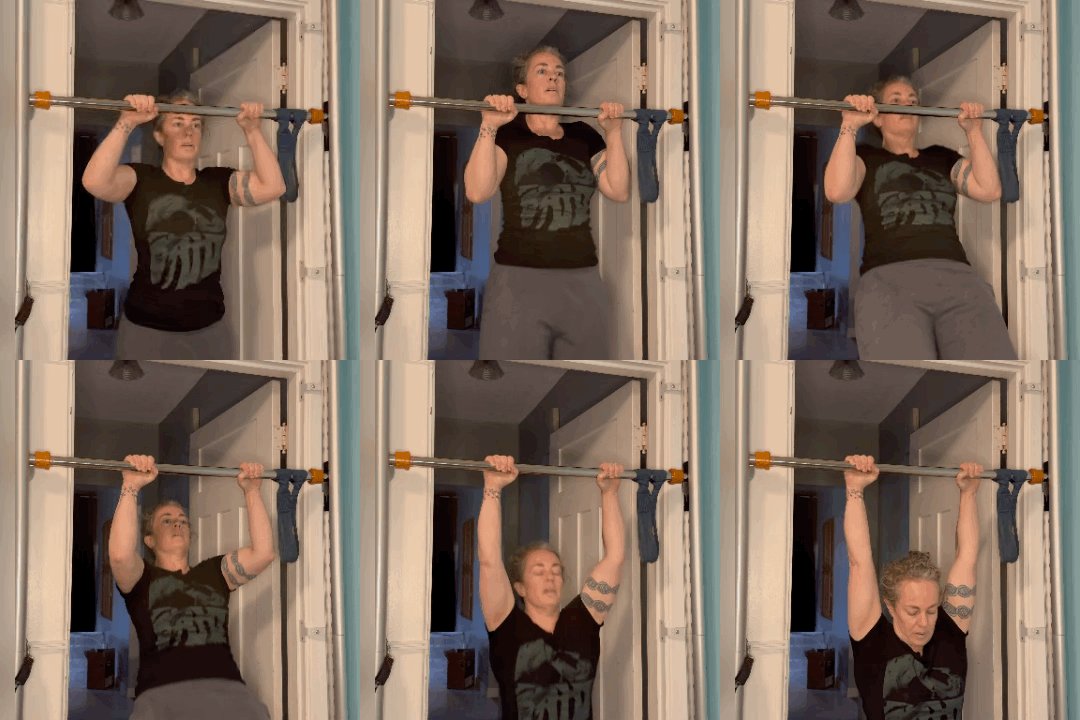
If you’re struggling with any of these issues, getting an idea of what lat engagement feels like in isolation will help a ton.
While there are a lot of different ways to start playing with lat engagement, here’s a super simple, easy way to get a feel for it that doesn’t involve any equipment!
